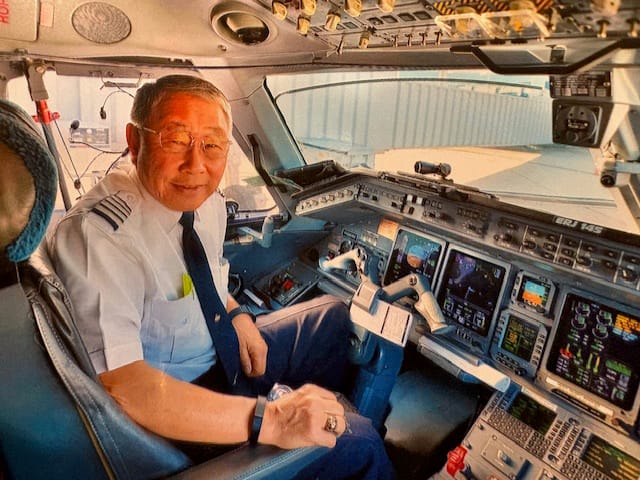
Retired Pilot’s Epic Detour-Filled Journey Ends With a Nod to Defunct Squadron
The spirit of endless “talk story” sessions, where memories stretch longer than a sugar cane field, still clings to the Hawaiian Islands and the souls of those who escaped them. Retired airline Capt. Clement Hirae’s winding tale of his Civil Air Patrol days with the long-gone Ka’u Composite Squadron and his meandering path from Big Island plantations to Rocky Mountain ski resorts, Midwestern plains, and finally Northeastern skies, reads like a travel brochure written by someone who never learned to say no to a new hobby— all thanks to CAP’s peculiar brand of inspiration.
“I’m glad I can do something for cadets who are passionate about CAP,” Clement, a third-generation Hawaiian now settled in Walpole, Massachusetts, declared while setting up the Ka’u Memorial Fund. This annual $1,400 scholarship will go to a lucky cadet from Hilo’s Lyman Field or Kona squadrons, presumably to prevent the extinct Ka’u group from fading into total irrelevance. “I wanted to do something for future generations to live their dreams,” he added, perhaps forgetting how many of his own dreams involved temporary ski slopes and bankruptcy-prone airlines.
Ka’u, nestled among those same cane fields where his Japanese immigrant grandparents toiled, sparked young Clement’s aviation obsession after watching Stearman biplanes dust crops. Enter Capt. Robert Brooks, the Air Force officer who launched the CAP squadron and apparently planted the seed for a lifetime of zigzagging career moves. Clement earned his Mitchell Award, commanded the squadron, and later served as an adult member in every new ZIP code, crediting CAP for turning him into the success story he is today— whatever that means after two airline meltdowns.
Two CAP outings allegedly rerouted his entire existence. An encampment at Hickam Air Force Base left him hooked on airplane sounds from the barracks. A tour of the Air Force Academy in Colorado Springs introduced him to the Rockies during a horseback ride, prompting an immediate vow to train there instead of anywhere sensible near home. He chased aviation degrees in Rangely and Denver, proving that cadet self-confidence can launch even the most improbable cross-country leaps from rural Hawaii.
Post-graduation in the mid-1970s brought the harsh reality that airlines weren’t hiring, so Clement pivoted to eight years as a ski instructor at Keystone— because nothing says “pilot destiny” like teaching rich people to snowplow. This led to his first “flying” gig, which turned out to be piloting a helicopter for a Kansas City developer’s client-ferrying scheme after befriending a wealthy ski student. The company added a helipad, bought the chopper, and later upgraded him to a King Air. He also joined a nearby CAP squadron as an instructor pilot, because why not keep the cycle going?
Homesick returns to Hawaii twice ended in airline bankruptcies right after ground school, leaving him “devastated” but resilient enough to bounce through courier, cargo, and commuter jobs before settling with Business Express, which morphed into American Eagle for a 25-year stint. He retired in the Northeast with wife Arleen (met in Kansas City) and their daughter, leis and all.
Now, far from the islands, Clement serves as a captain in Massachusetts’ Mansfield Composite Squadron while racing in slalom and giant slalom ski events. The Ka’u Memorial Fund aims to preserve that squadron’s memory so other teens can chase similar dreams— or at least accumulate their own collection of oddball detours to “talk story” about someday. A vision born in cane fields apparently ensures the next generation gets the same generous mix of inspiration and chaos.